
On Sunday, our post-conference leadership survey found the first big change of the race, with James Cleverly overtaking Robert Jenrick both on members’ first preferences and in the final head-to-head.
That might have been coincidence, so we asked our panellists explicitly whether or not events in Birmingham had made a difference.
The graphic above tells the story: according to too our panel, Cleverly was the only candidate to have a good conference. More than half of respondents said they were more likely to vote for him, versus just 14 per cent the reverse.
Every other hopeful saw a net loss in support, although Kemi Badenoch can at least take comfort that it’s fairly marginal, with roughly a third of Tory members being more likely, less likely, or no more or less likely to vote for her. Given that her campaign lost a whole media round to the row over her comments on maternity pay, that’s nothing to complain about.
Both Jenrick and Tom Tugendhat, on the other hand, each saw a roughly two-to-one split in members moving away from them versus towards them. Why might that be? Our next question provides a clue:
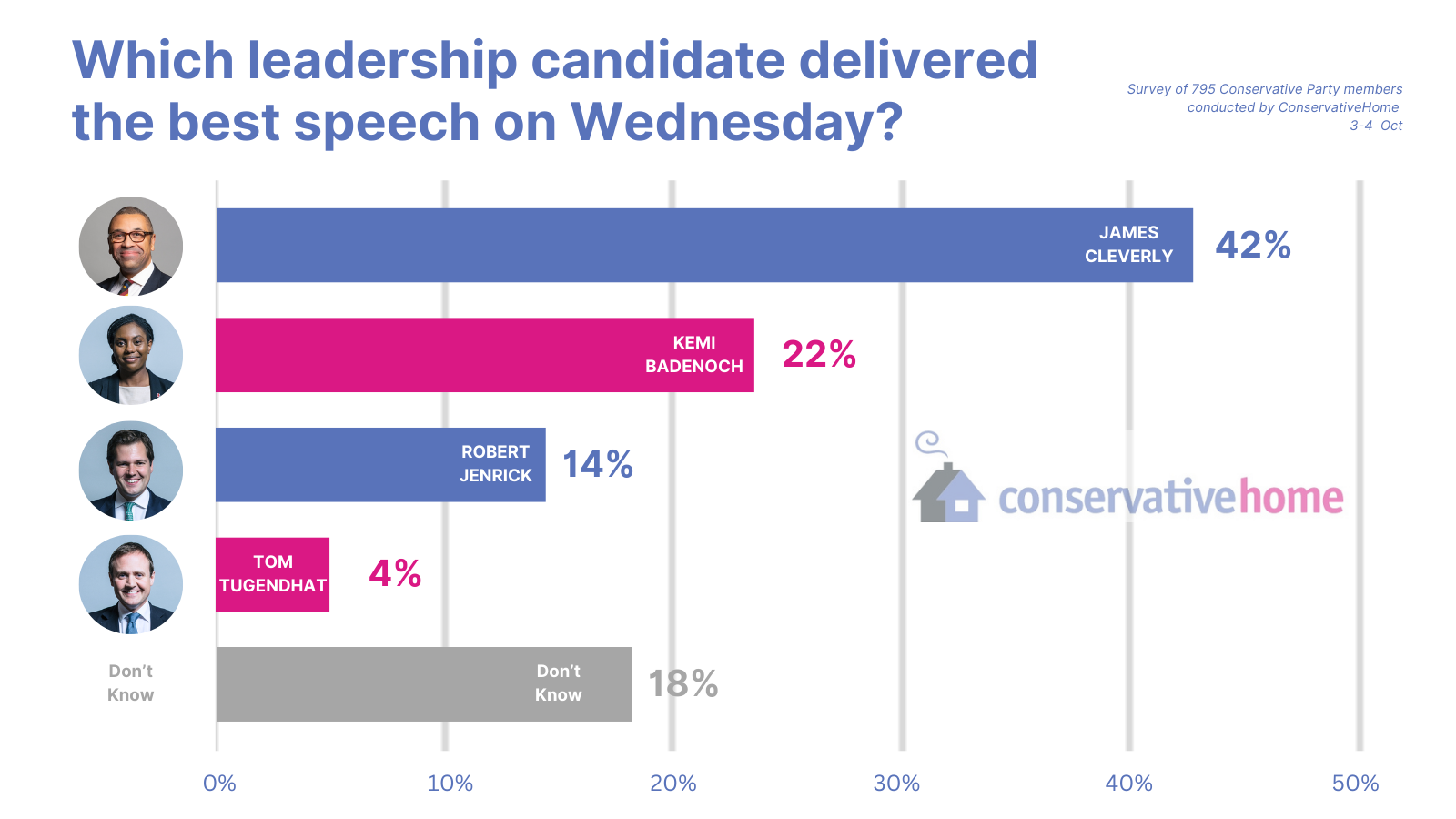
It’s important for those of us who were in Birmingham to remember that most members weren’t.
Wednesday’s big set-piece speeches were each candidate’s most high-profile moment and were perhaps the only thing that many of our panel will have actually seen.
In their view, Cleverly walked it, and those low scores for Jenrick and Tugendhat probably explained their low scores overall (especially Tugendhat’s, who seemed to have a fairly good conference with no media rows).
This is especially the case as it seems to cut across another of our questions. When we asked our panel to rank various factors that might inform their choice of leader, experience (one of Cleverly’s chosen selling points) was ranked ‘Least Important’ by 42 per cent of respondents, whilst liking their personality and character (his other one) was the most popular choice for second-least important.
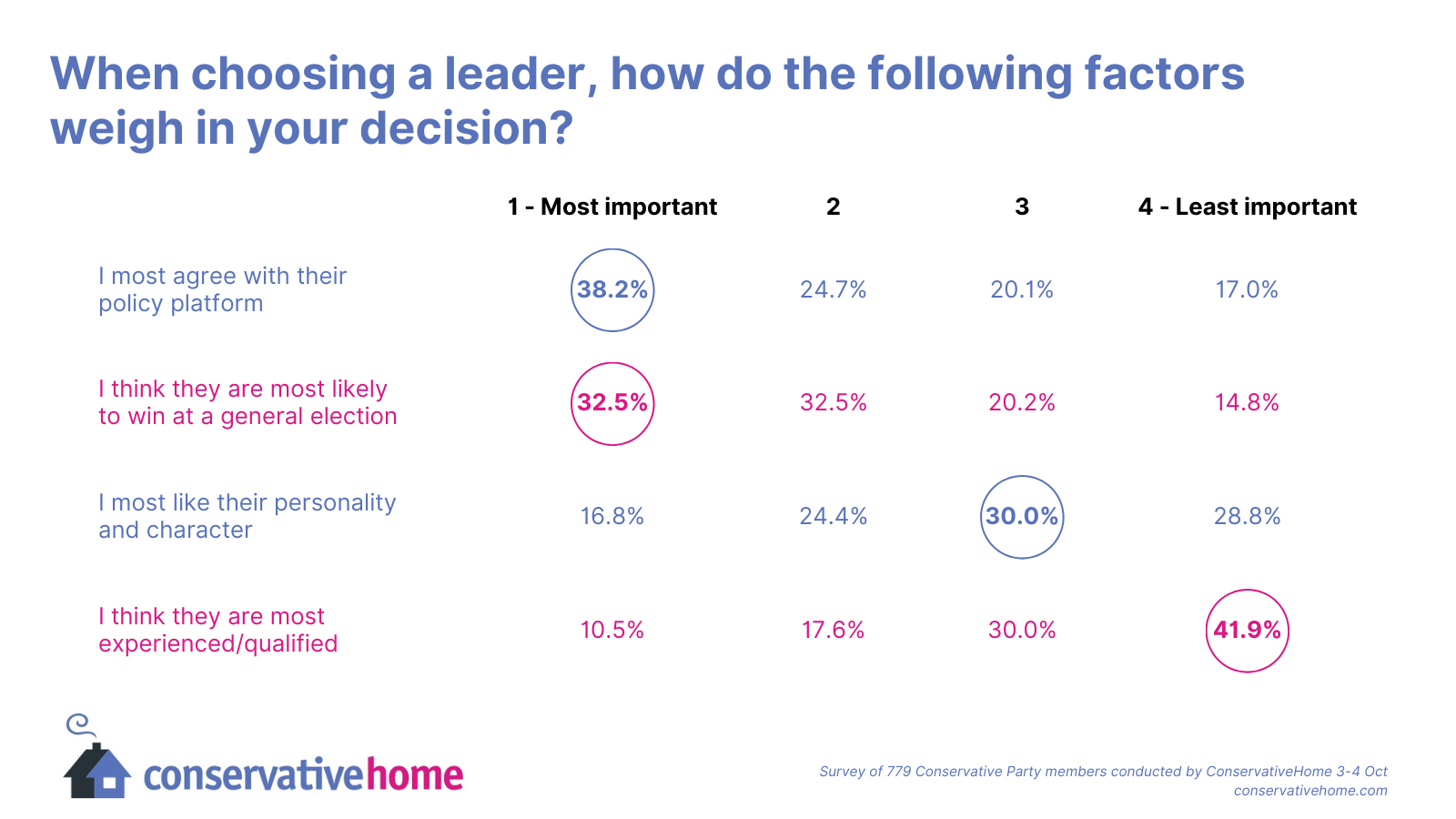
Perhaps it all comes down to whether or not Tory members think the Shadow Home Secretary is most likely to win a general election? Regardless, it must be disappointing for Jenrick and Tugendhat, who have both offered more detail on policy than their rivals, given that agreeing with a candidates’ ranked policy platform was the most important consideration by 38 per cent of our panel.
So, does this vindicate the 1922 Committee’s decision to have such a long contest? It would certainly seem to, given that it’s the first time in the whole contest we’ve seen a big upset in the polls.
But it’s not quite that clear-cut. We’ve been asking our panel every month whether or not they agree with the timetable. When we last published this question back in August, there was strong support, with just shy of six in ten Conservative members backing the ’22’s decision. Now?
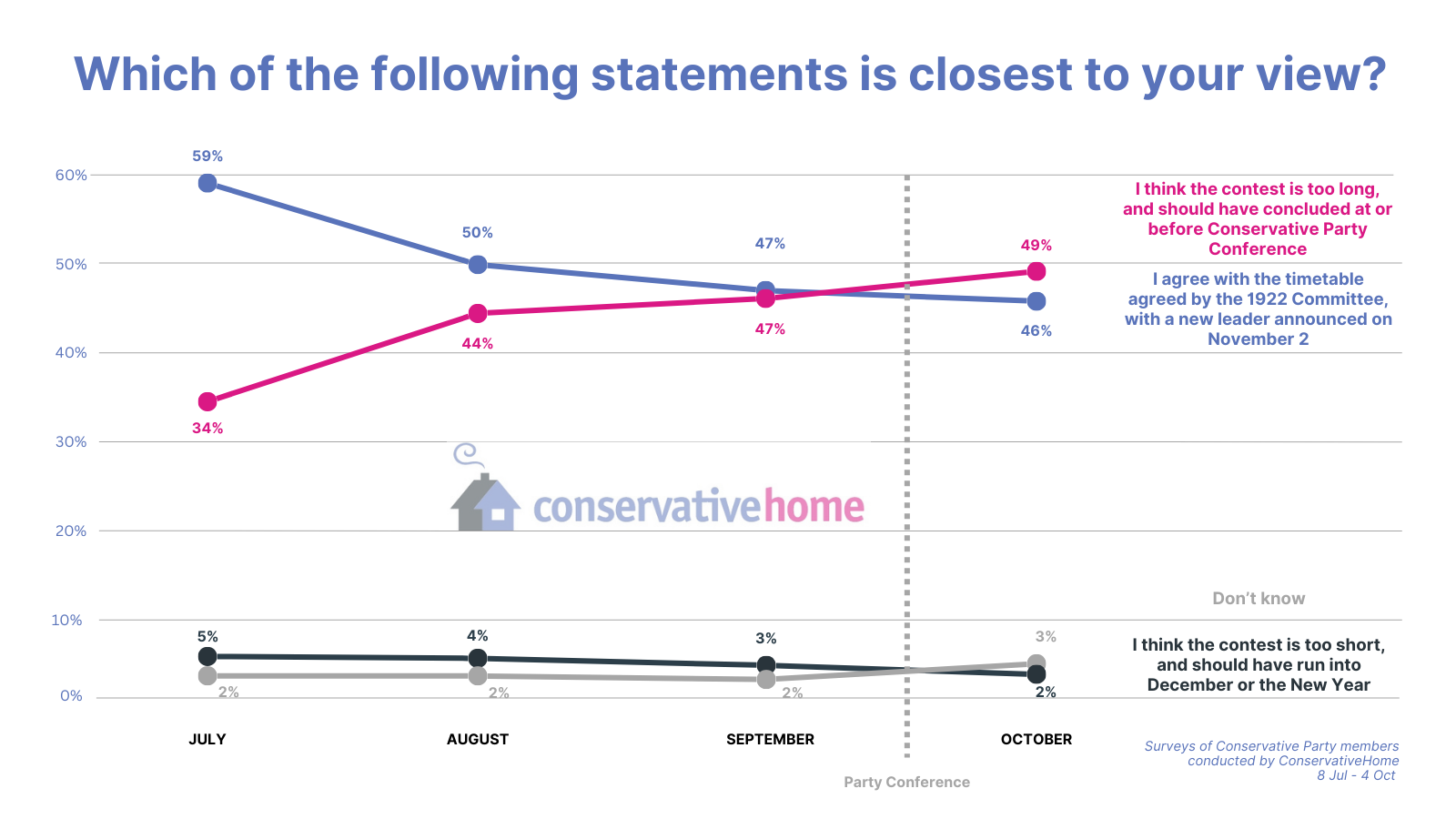
Well, opinion has been trending negative for the entire contest. Perhaps Labour immediately running into so many difficulties started to change members’ minds about having an interim front bench in place for so long.
This month, we got crossover: almost half of our panel now think the contest should have ended at or before the Party Conference. This despite the fact that many of them report that events in Birmingham have had a significant impact on their view of the contest!
Such apparent contradictions are the prerogative of any public, including the Tory public. But it may increase pressure on the 1922 Committee to shorten the race so that the new leader (and their new shadow chancellor) can be in post when Rachel Reeves delivers the Budget at the end of the month.