Imagine you lived out in some remote, countryside village, with a population of about 350 or so, and there was no village pub. You’d be pretty miffed. Now imagine you lived in that same pub-less village, and your government went and plonked 1,256 likely-mentally-ill, definitely-fighting-aged men right next door. Oh, and you know literally nothing about them. You’d be miffed and then some.
Despairingly, for the people who call Piddington home, they don’t have to imagine such a scenario, because they’re living it. In June of this year, the government announced that MoD Bicester would be repurposed as a migrant processing facility. Male asylum seekers will be held in the camp for up to 90 days, before they are put through the system and shipped off elsewhere. And this will repeat, much to the cries of the village’s population, indefinitley.
Such a development has been at the centre of immense controversy. The parish council held a symbolic referendum in defiance of the government’s plans, voting to secede from the United Kingdom by 285 votes to 26. Following such protests, Kemi Badenoch, alongside Joy Morrissey, travelled to the community, aiming to show solidarity with the local women who had expressed concerns over their safety and wellbeing.
Last weekend, the village was again in the headlines after Chris Philp and Zia Yusuf became embroiled in a spat of sorts, with the latter hurling accusations at Philp over his record in government. Philp, meanwhile, told Reform’s roleplayer-in-chief to “pipe down” and “read the room.”
But media reports only tell one so much. Curious to see just how bad the situation was for local residents, I was dispatched to the parish yesterday. And, I regret to inform readers that things are far worse than they might first appear.
On the drive in, the problems are immediately on display. Signs reading “NO TO BICESTER MOD ASYLUM CENTRE” line the outskirts of the base and a placard reading “The Village That Roars – 350 Residents. 1250 Proposed” greets one on their entry. Noticeably, in their show of independence, the village folk have also erected displays which read “Principality of Piddington” – a reminder that they now see themselves as separate from the UK.
Entering the village proper, one gets a feel for just how bad things are. The entire thing is effectively one long street with a number of small offshoots. There is no village shop, nor, as mentioned prior, is there a local pub. The only real source of community is the village hall.
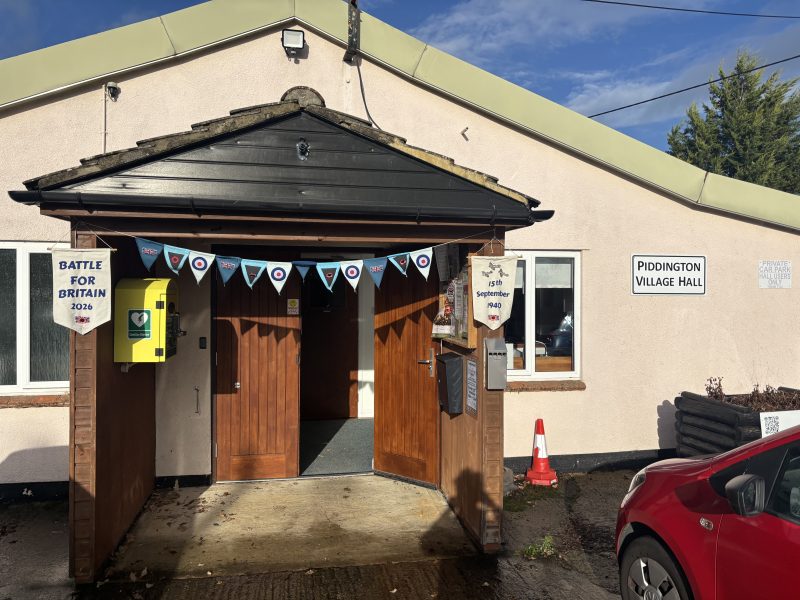
And so I began my search there. Walking in, the locals seemed rather chipper. They had put on a painting class of sorts and were chatting away with one another. However, upon speaking to one of the residents, they were quick to voice their concerns.
“We feel like prisoners now,” they remarked, adding that they have begun construction on a new garden fence in an effort to keep potential intruders out. Another individual told me that, “as a woman, regardless of whether those men are good or bad, to see one or two of them that you don’t know, walking towards you, straight away you’re going to feel vulnerable.”
She went on to discuss how the government’s decision is unfair for the children of the village. “Part of growing up is independence. It’s being able to walk to the bus stop with your mates. It’s being able to go across and play football in the park. Those children here will not be able to do that.. Regardless of what age they are, as parents you’re not going to want your children to be wandering around.”
It was only after telling me all of this that the weight of what she had said seemed to catch up with her. She began to well up, apologising for getting a tad emotional, and I reached out to give her a hug.
Those I spoke to in the village hall were thankful, however, of both Chris Philp and Zia Yusuf’s appearance over the weekend. Whilst residents were “not surprised to see” the two squabbling, they acknowledged that the stunt “raised awareness of the issue” in Piddington because of the fact that it was “heavily reported.”
They also expressed their thanks to Mike Tapp, who has been the only Labour figure to visit the village. “He was very sympathetic because he understood our plight” one resident told me.
Having spoken to those in the village hall, my next stop was to the children’s playing field, way down the road. The park itself backs onto the MoD facility, and one can quite easily get to the wire-mesh fence that acts as a barrier between the two locations. Unfortunately, one parent I spoke to told me that they doubt the park will be used if the proposals go ahead. No one would feel safe, and so the kids wouldn’t be allowed to play outside.
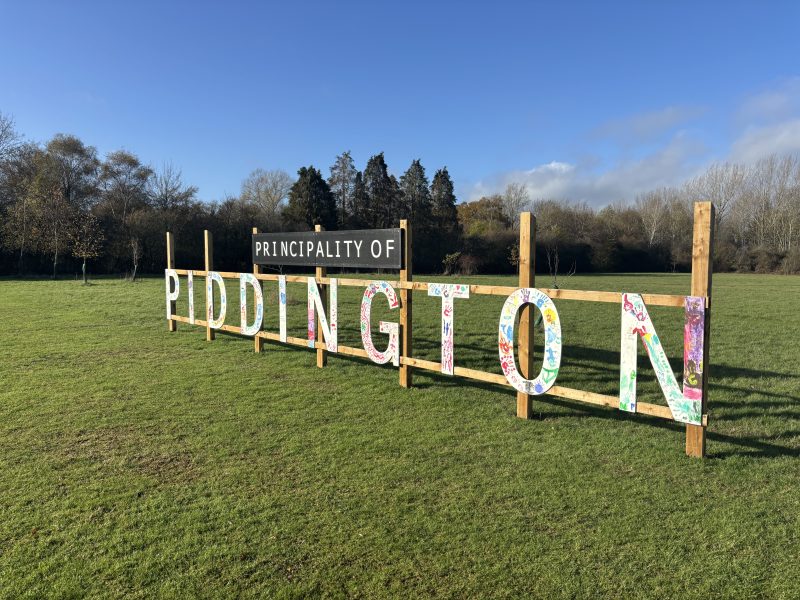
And this mindset was reiterated by Tim McNally, the leader of the Parish Council who has led the charge in opposing the government’s plans. He conceptualised the problem as a dichotomy. In his words, he viewed it as a “yes summer” and a “no summer”.
This summer just gone, he argues, was an example of the former. “Can I go out with my friends? Yes. Can I go on my bicycle and go to the park? Yes. Can I go play football? Yes. Can I go down to the graveyard? Yes. It’s all a yes summer.”
“Next summer” he said, “will be no. We will change the security profile to keep safe.” Security was paramount. Women in the village, he said, would be outnumbered by “10:1“.
Much like the constituents he represents, McNally also downplayed the argument between Yusuf and Philp. “It’s not a spat” he said, telling me that the two didn’t know what was going to be asked of them before they arrived.
Nevertheless, the argument served a purpose. “Look at all the noise. Look at the headline.” That’s what mattered to McNally and the residents. Making their voice heard. They even have a village song to raise awareness titled “BATTLE FOR BRITAIN” published, by pure coincidence, on the anniversary of the actual Battle of Britain. “It’s catchy, isn’t it?” he asked me, with a certain glimmer in his eyes. I’m not entirely certain he knew it was AI.
All of this media attention, however, has not fazed the government whatsoever. They seem intent on pushing forward with the proposal anyhow, with the final stage being a Home Office sign off. McNally and his people feel as though they are fighting a losing battle. Even looking to work with local councillors is proving fruitless. “They do jack shit. We spend all this goddamn money, and it’s wasted.”
But perhaps the real kick in the teeth for the people of Piddington is that the site isn’t even ready for habitation. If one is able to get close enough to the main gate without being accosted by some MoD official in a high-vis jacket, they can see that the site is little more than a bunch of concrete slabs piled one atop the other.
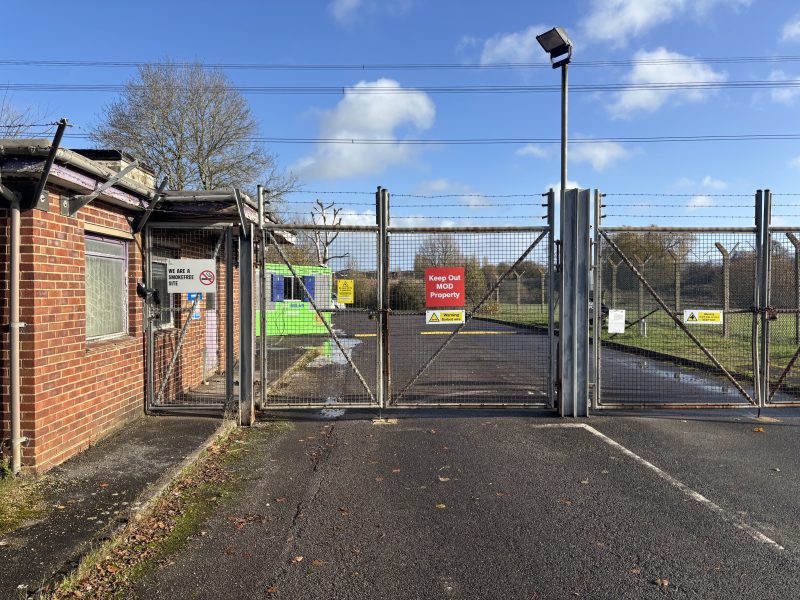
Not only that, but the locals complain that their village has already struggled with water shortages and power cuts over the summer. The prospect, then, of some colossal, brutalist abomination being erected on their doorstep has done little to reassure those who fear that the existing pressures on their infrastructure will only be worsened.
The government has seemingly acknowledged such a reality, opting to fuel the site by diesel generators instead. This, unsurprisingly, has not wooed residents who now worry about plumes of smoke lingering in the village air. But hey, at least the base itself is a smokefree site.
To put it bluntly, the whole ordeal is a shambolic mess. A living example of the social contract being broken. A peaceful village having another peoples superimposed upon them, with little to no restrictions on their freedoms or movements, all whilst local residents are told to suck it up and get on with it.
The people of Piddington are rightly angry. They feel as though they have been ignored. That despite such vocal opposition to the proposals, the government has gone ahead with the plans anyway, viewing them not as a community with a shared history, but as mere numbers on a spreadsheet.
Roger Scruton once talked about the love of one’s home, something which he labelled as oikophilia. A phrase which combines tradition, community, family and local environment into one. Unfortunately, after more than 800 years of developing and refining that sense of community, the village of Piddington has come to blows with a government that cares little for tradition nor history. If one needed an example of a modern-day tragedy, they need look no further than this.